Oh Hell Scorekeeper
A mobile-first app that handles bidding rules, scoring, and standings for the card game Oh Hell — designed and built for my family, so no one is stuck managing the game.
Problem
My family loves playing Oh Hell, but someone always had the daunting task of tracking bids, tricks, and running scores by hand — and it's just arduous enough to zap the fun.
Approach
Built a mobile-first scorekeeper that enforces the game's rules automatically, does all the math, and stays out of the way — so everyone, including the scorekeeper, can have fun and focus on their gameplay.
Impact
Seamless gameplay, zero scoring, and a game recap everyone actually looks forward to, win or lose.
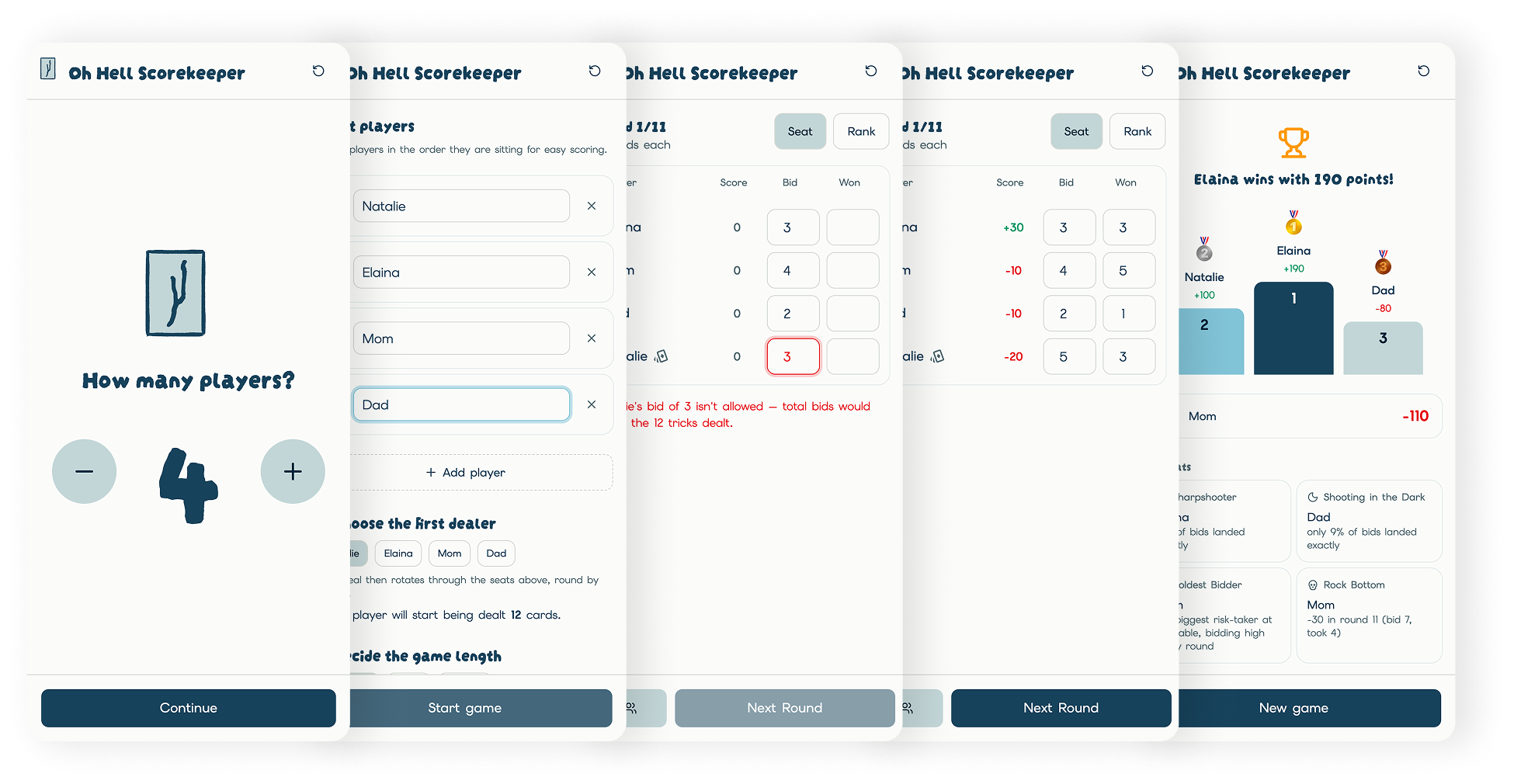
Overview
Oh Hell is a trick-based card game my family always plays in the summer — it's easy to learn, but the scoring is fussy: every round the hand size changes, one player is barred from a specific bid, and the final score for each player depends on comparing their bid to the tricks they actually won. Doing that by hand, round after round, for a whole table, is tedious and error-prone — and it's always the same person stuck doing it instead of playing.
I designed and built the Oh Hell Scorekeeper to take that job away from a person entirely. It's a mobile web app that walks the table through setup once, then handles bid validation, scoring, and standings automatically for the rest of the game — built for my family, but usable by anyone who plays.
- Flexible game modes — a full game, a quick version, or a custom length, so the format fits the night
- Automatic rule enforcement that blocks the one bid the dealer isn't allowed to make, and checks that tricks won always add up
- Seat-order or rank-order views, so scoring stays intuitive round to round and "who's winning?" is a one-tap answer
- A game recap with a podium and a handful of fun, genuinely game-specific stats to close out the night
Get the game going
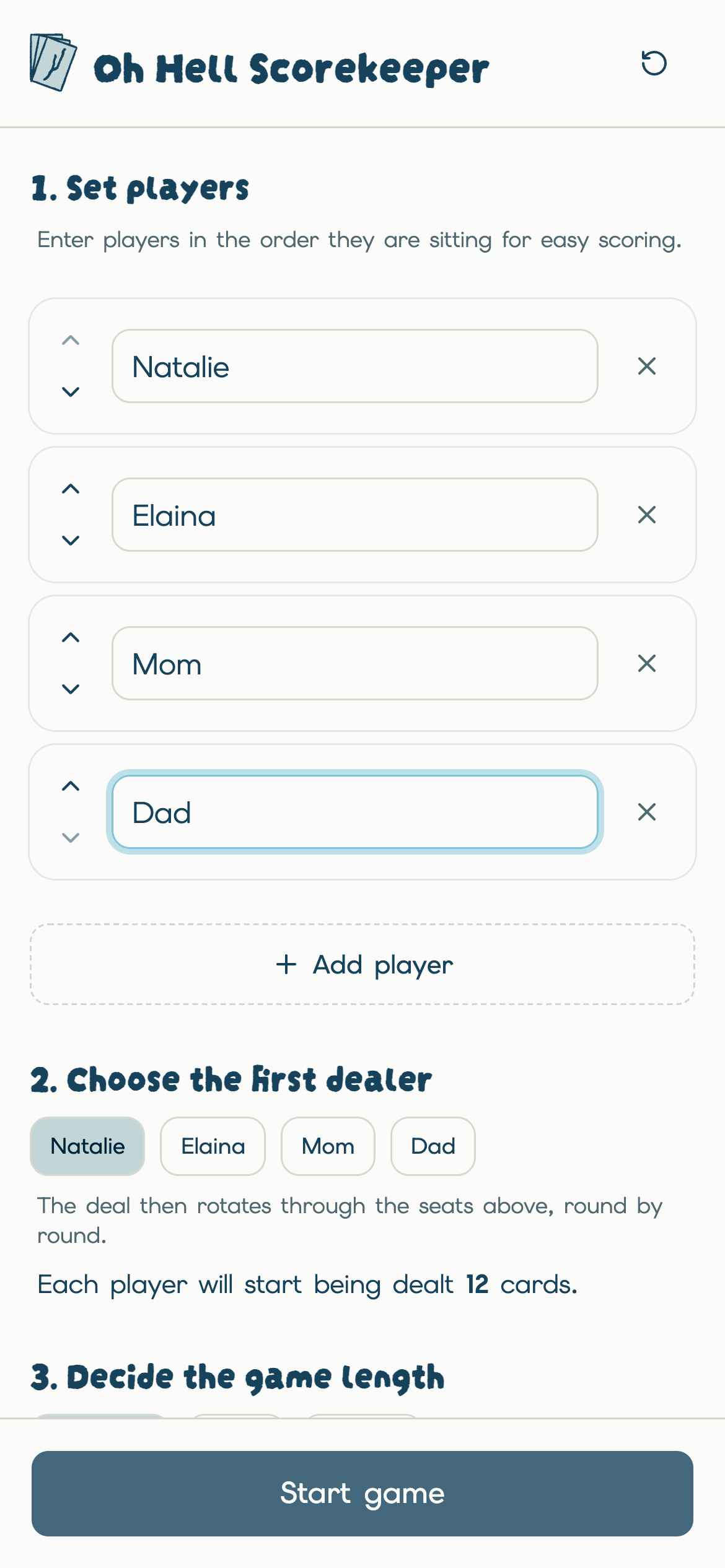
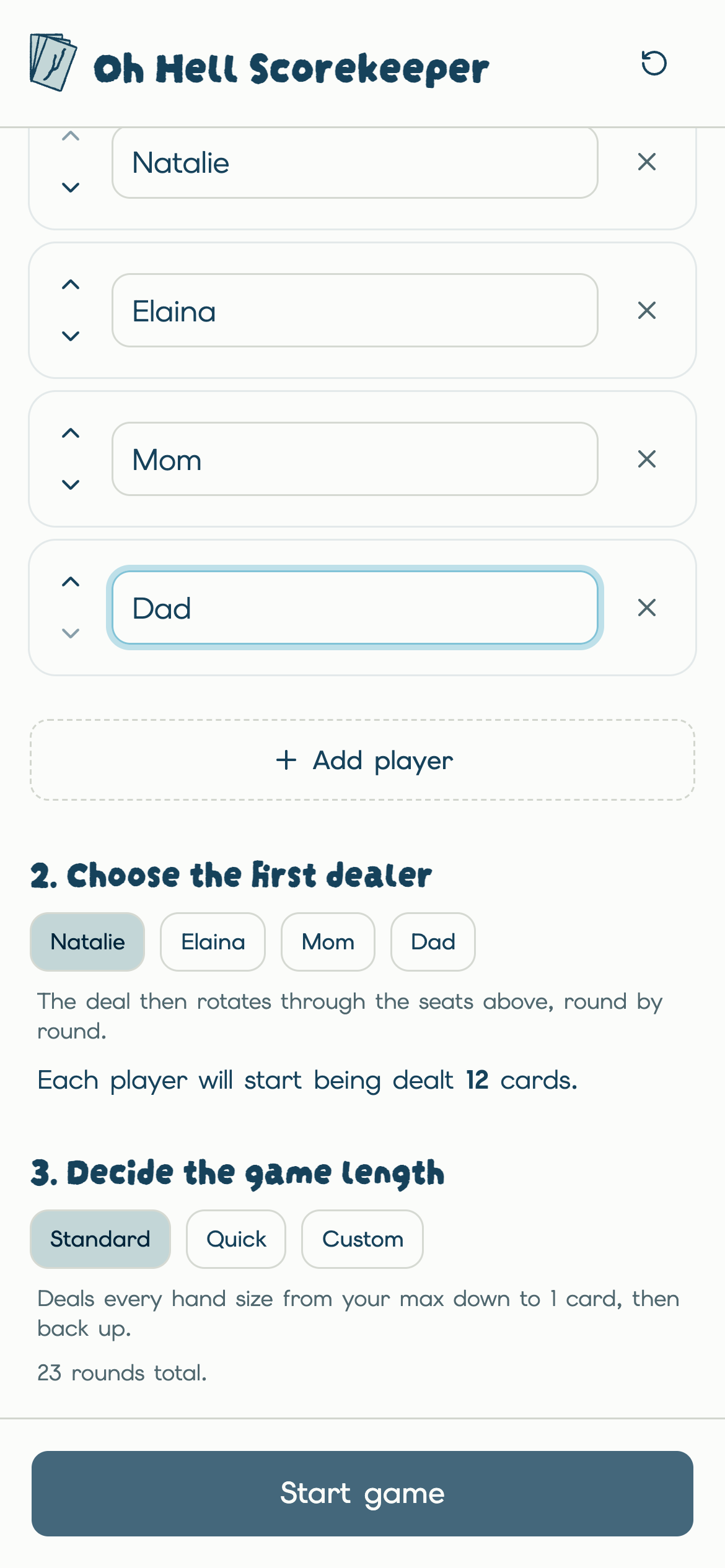
Setup is three quick decisions — how many players, who's sitting where, and how long the game should run. Players are entered in seating order, which is what makes every round afterward fast: the app already knows who bids and scores in what sequence, so no one has to think about it at the table.
The first dealer is chosen from the same seat list, and the deal rotates from there automatically for the rest of the game. Game length is a real design choice, not just a setting: Standard deals every hand size from the max down to one card and back up (the traditional full game), Quick skips every other hand size for a shorter version with the same shape, and Custom lets the table pick exactly where the deal turns around — useful when a full game is too long for a weeknight.
Scoring, without the arguments
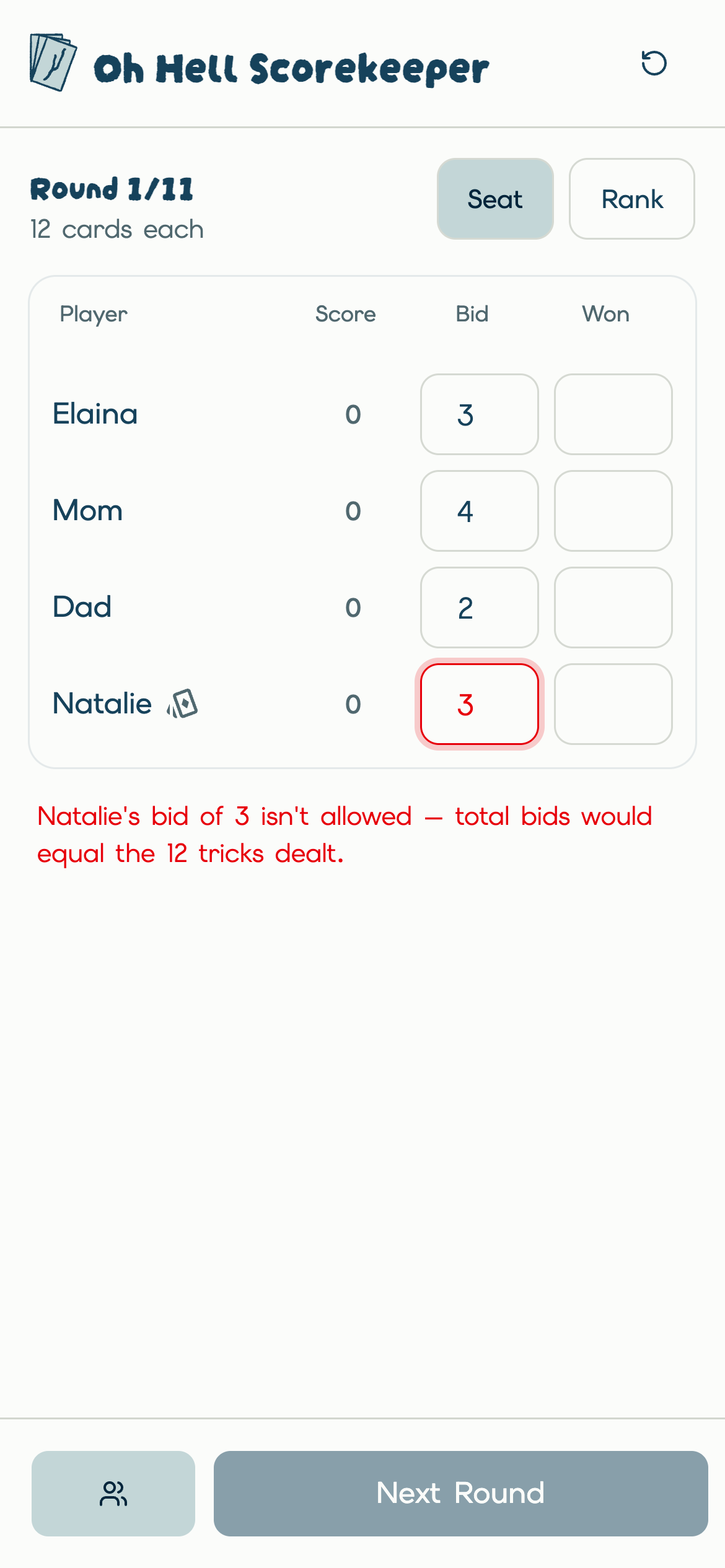
In Oh Hell, the dealer isn't allowed to bid the exact number that would make every bid at the table add up to the tricks available — someone always has to be wrong. The app calculates the forbidden bid live as the table bids and blocks it outright, with a plain-language explanation instead of a rule no one wants to be the one to enforce.
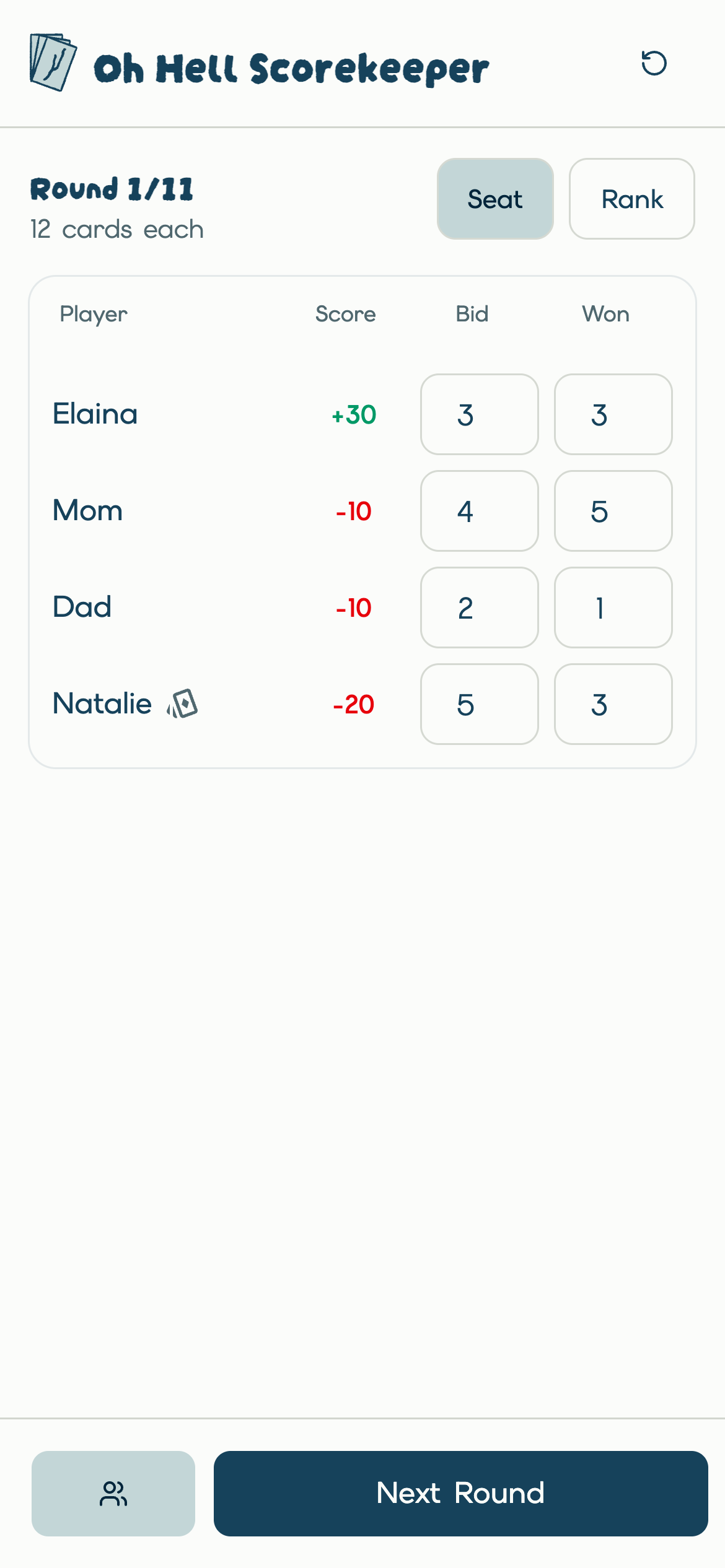
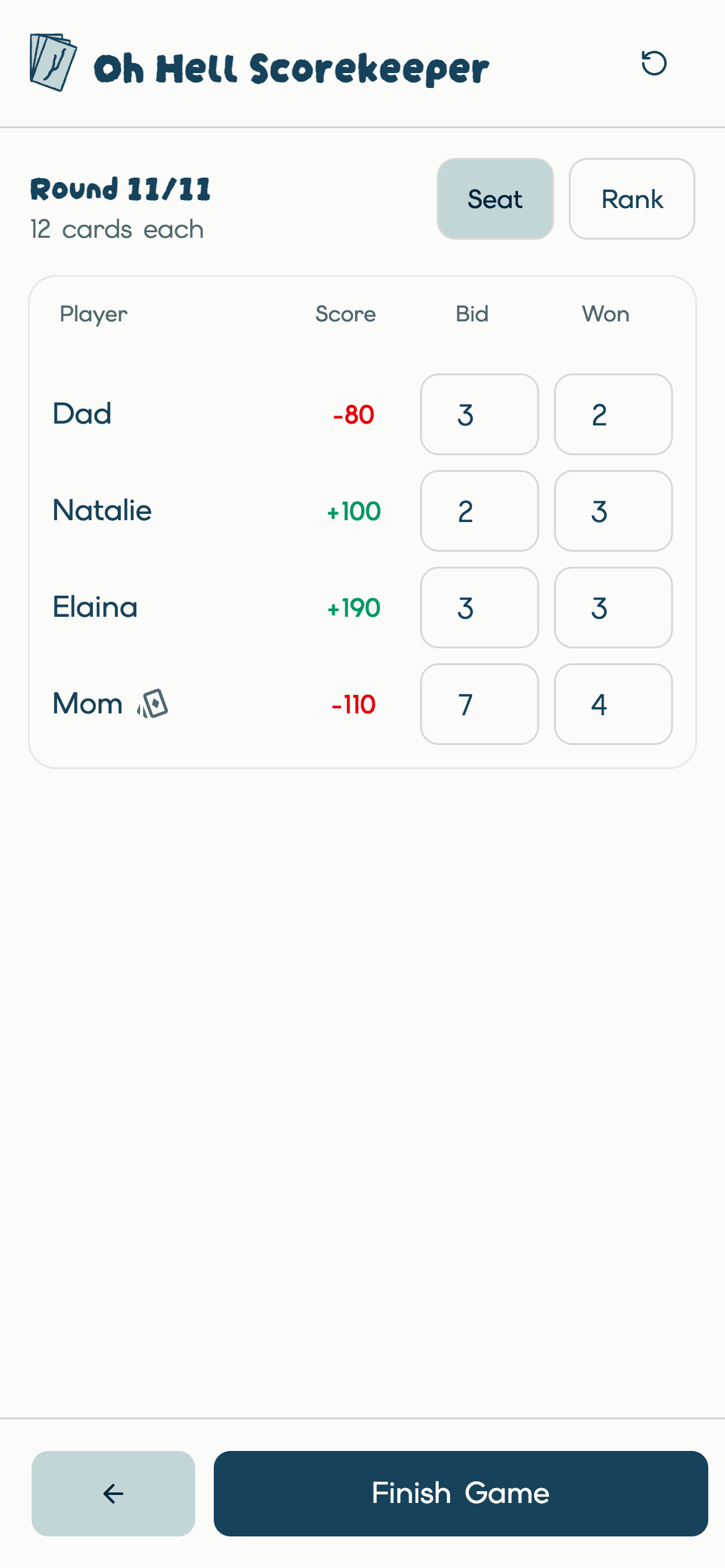
Once tricks are in, the same discipline applies to the score itself: tricks won across the table have to add up to the cards dealt, or the round can't be marked complete. Scores update live and are color-coded — green for a positive round, red for a miss — so a glance at the table tells the story without doing any mental math.
Seat order or rank order, on demand
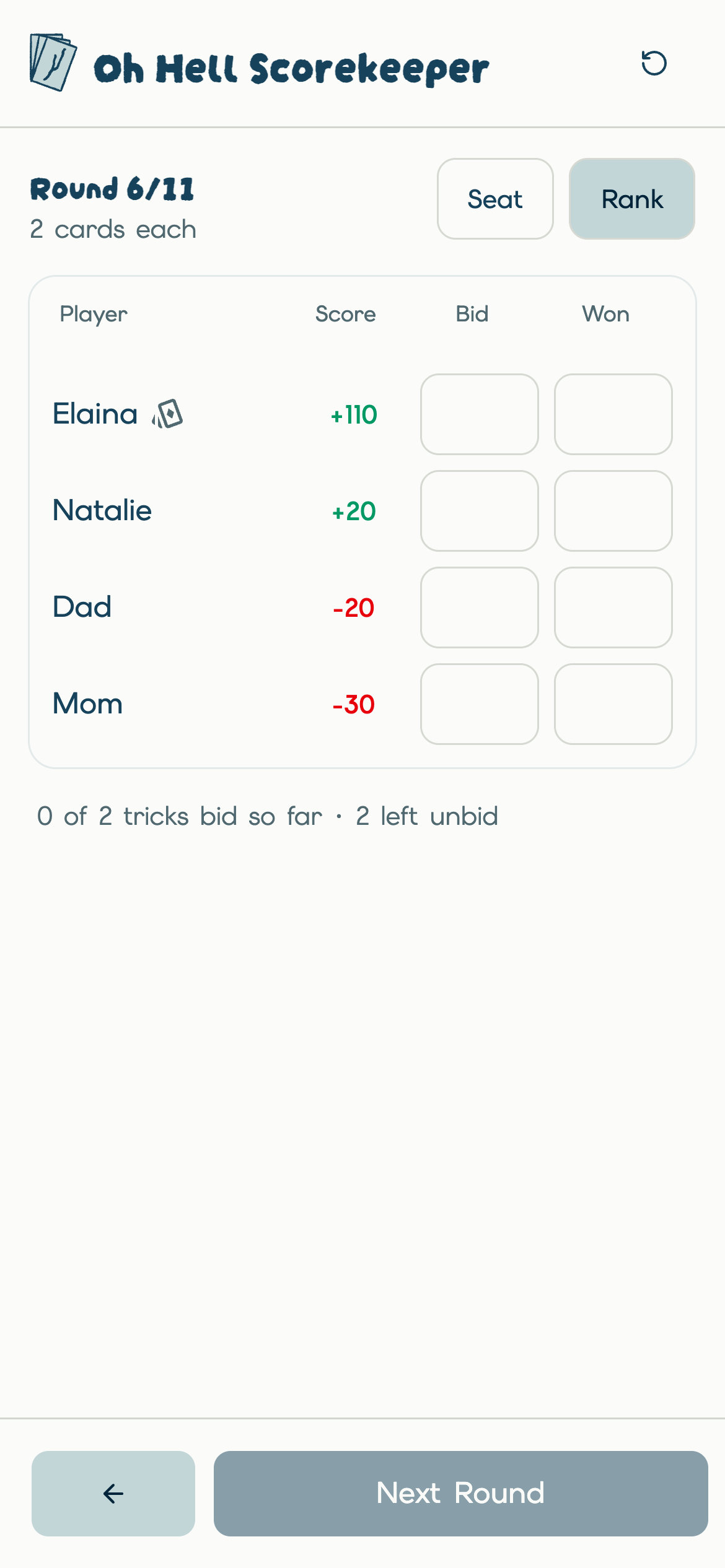
During play, the table is listed in seat order by default — matching how bids and tricks actually get called out, so entering scores stays fast and intuitive. But mid-game, what people actually want to know is "who's winning?" — so a single toggle re-sorts the same table by score instead, highest first. No separate leaderboard screen, no mental math — just a tap.
A recap worth sticking around for
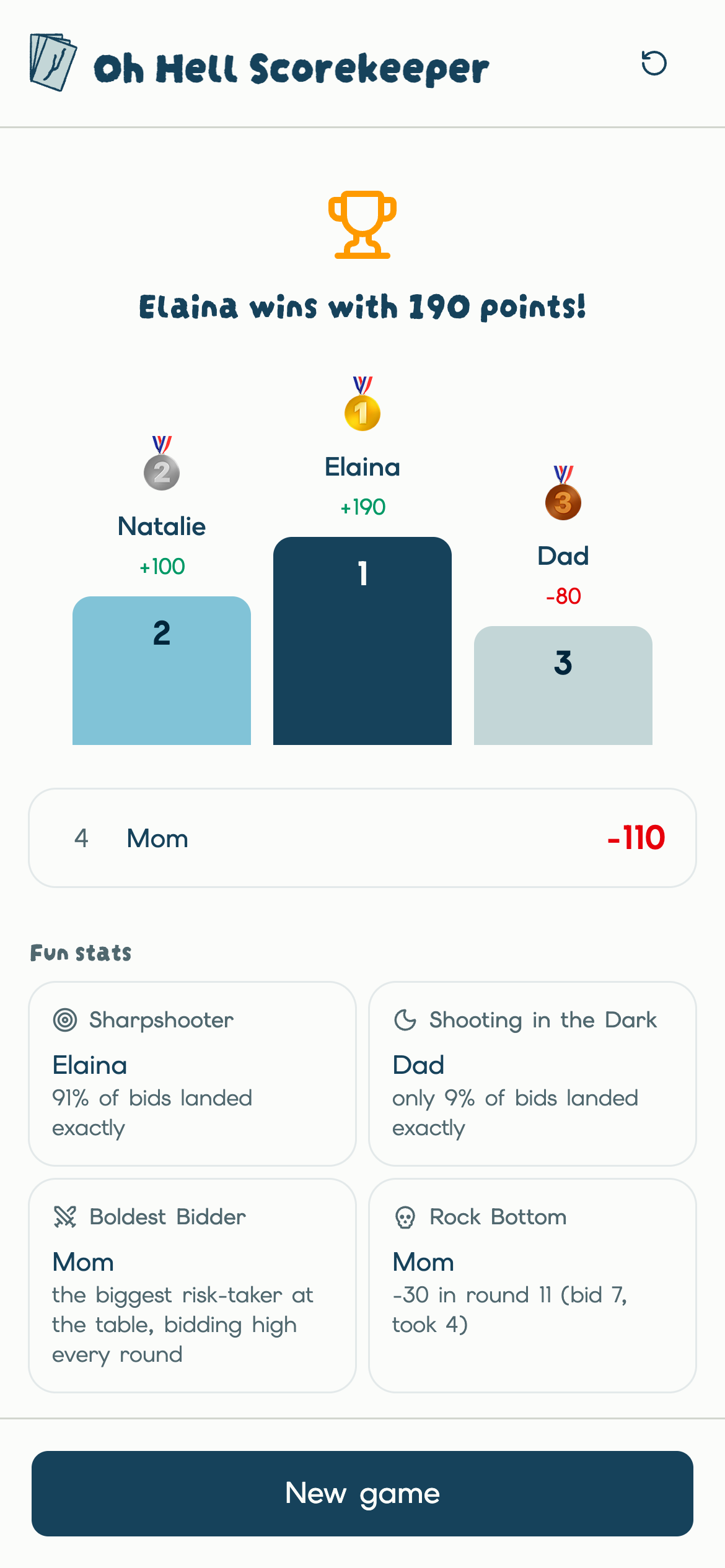
The game ends with a podium and a handful of fun stats pulled from what actually happened that game: Sharpshooter for the most accurate bidder, Shooting in the Dark for the least, Boldest Bidder for whoever bid the biggest share of their hand all night, and Rock Bottom for the single worst round anyone posted. It turns a spreadsheet-style outcome into something worth reading out loud at the table.
Reflection
I designed and shipped end-to-end for an audience of people I actually know — which meant the feedback loop was immediate and honest in a way client work rarely is. It was also so fulfilling to see something I worked on making my family's night more enjoyable and fun.
The dealer-bid rule turned out to be the detail that mattered most: it's the one rule real tables get wrong constantly, and automating it quietly is worth more than any amount of visual polish elsewhere. The stats at the end of the game were pure delight - well, as long as you weren't Rock Bottom.